Double cleansing: How the double cleansing method works
The quality of cleansing determines the effectiveness of all subsequent care: no serum or cream will work to its full potential over residues of SPF, sebum, and urban pollution. Double cleansing is a two-step evening facial cleansing system in which a hydrophilic oil dissolves oil-soluble impurities, and a foam or gel completes the process by removing water-soluble ones. This method, which has become the standard in Korean skincare, is now recommended by dermatologists worldwide precisely because it cleanses the skin completely without damaging its protective barrier.
Double Cleansing: The Essence and Principle of the Two-Step Method
Double cleansing is the sequential application of two products with different mechanisms of action. The first step involves an oil-based product: hydrophilic oil or cleansing balm. Following the principle of "like dissolves like," the oil binds all oil-soluble substances – stubborn makeup, sunscreens, skin sebum, silicones, and lipophilic particles of urban smog. The second step is a water-based foam, gel, or cream cleanser that removes water-soluble impurities, sweat, and residues from the first product.
The key advantage of the system is the distribution of the load. When one product has to remove both stubborn SPF, sebum, and dust, it inevitably has to be aggressive – with a high concentration of surfactants that destroy the lipid barrier and increase transepidermal water loss. In a two-step regimen, each product addresses its specific task, so both can be gentle. The result is clean skin without tightness, squeaky feeling, or compensatory oiliness.
What is Double Cleansing in Simple Terms?
Imagine washing a frying pan after cooking: cold water without detergent will only spread the grease over the surface, while detergent will dissolve it and allow it to be rinsed clean. The same logic applies to the skin. A water-based foam is physically incapable of fully dissolving waterproof sunscreen or thick foundation – it simply glides over the oily film. Hydrophilic oil, on the other hand, merges with this film, and upon contact with water, emulsifies – turning into a light "milk" that washes away with all dissolved impurities.
This method originated in Asian beauty culture, where the daily use of dense sunscreens has been the norm for decades. It was precisely the need to completely remove stubborn SPF filters every evening without over-drying the skin that gave rise to the two-step system. With the global spread of daily photoprotection culture, the relevance of double cleansing has also grown in the West: modern stubborn sunscreens simply cannot be washed off with an ordinary gel.
A crucial point: double cleansing is an evening procedure. In the morning, the skin has not been exposed to makeup, SPF, or pollution, so one delicate step – a foam or even warm water, depending on skin type and cosmetologist's recommendations – is sufficient.

Why One Cleansing Step is Not Enough
The modern urban dweller's skin daily accumulates a complex "cocktail" of impurities on its surface, and most of its components are oil-soluble. A water-based product, no matter how good, primarily works on the water-soluble fraction, leaving the lipophilic layer partially untouched. The consequences accumulate gradually: clogged pores, dull complexion, reduced effectiveness of serums and creams.
Here's what remains on the skin after just one foam wash:
- SPF filter residues – modern stable formulas are designed to be water- and sweat-resistant, so water and mild surfactants don't affect them;
- oxidized sebum – the skin's own oil, which oxidizes during the day and becomes a breeding ground for bacteria;
- silicones and polymers – makeup and primer components that form a persistent film;
- lipophilic pollution particles – exhaust gases and smog that "stick" to the oily film and enhance oxidative stress.
Attempting to compensate for this with a more aggressive one-step product has the opposite effect: sulfate surfactants in high concentrations destroy not only impurities but also the lipids of the stratum corneum. The skin responds with tightness, reactivity, and – in the case of oily skin – compensatory hyperproduction of sebum. Double cleansing breaks this vicious cycle.
First Step: Hydrophilic Cleansing Oil
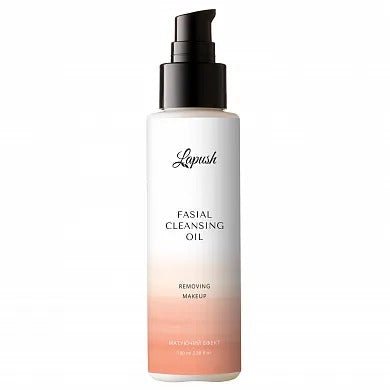
Hydrophilic oil is a mixture of cosmetic oils and an emulsifier that, upon contact with water, transforms the product into a milky emulsion. The emulsifier distinguishes it from ordinary oil: pure vegetable oil will remain as a film on the skin, while hydrophilic oil will wash off completely, taking dissolved impurities with it. An alternative form for the first step is a cleansing balm (sherbet): the same formula in a solid texture that melts from skin warmth and is convenient for travel.
The application technique is crucial. The oil is applied to a dry face with dry hands – moisture prematurely initiates emulsification and reduces the dissolving capacity of the product. The product is massaged onto the skin with circular motions for 30–60 seconds, paying attention to the eye makeup area, nose wings, and hairline, where product residues accumulate. Then, the hands are moistened with warm water, the oil is massaged until it turns into a white emulsion, and then thoroughly rinsed off.
A common myth is that oil cleansing is contraindicated for oily skin. In reality, the opposite is true: a correctly chosen hydrophilic oil dissolves oxidized sebum and sebaceous plugs more effectively than any gel, without stimulating compensatory oiliness. The key condition is a non-comedogenic composition and complete rinsing with a subsequent second step.
Second Step: Foam or Gel to Complete Cleansing
The second step removes water-soluble impurities and emulsion residues, bringing the skin to complete cleanliness. The optimal choice is products with mild amphoteric or non-ionic surfactants and a physiological pH level of 5.0–5.5, which corresponds to the skin's natural acidity. It is pH-balance that distinguishes modern foams from classic alkaline soaps, after which the barrier takes up to eight hours to recover.
The form of the product is chosen according to skin type and personal comfort:
- Foam or mousse — airy texture with a delicate action; a universal option for normal and combination skin;
- Gel — a light feeling of freshness and oil control; for oily and acne-prone skin;
- Cream or milk cleanser — minimal surfactants, maximum emollients; for dry, sensitive, and mature skin;
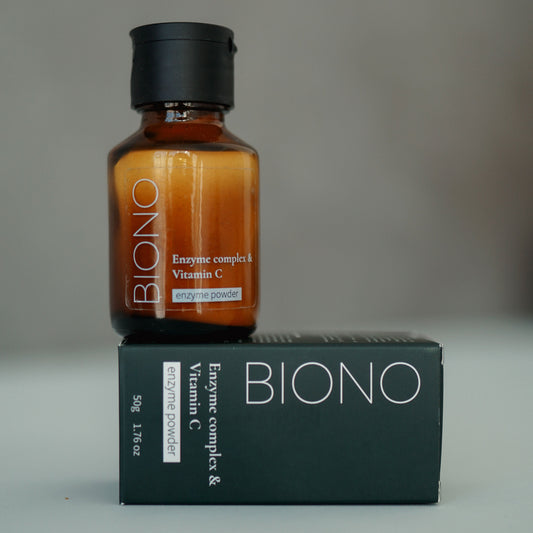
- Enzyme powder — gentle daily exfoliation in addition to cleansing; for dull skin with uneven texture.
The second step lasts 20–30 seconds with light circular motions, after which the product is rinsed off with cool or lukewarm water. Hot water is an enemy of the barrier: it further washes away lipids and causes redness. The criterion for a correctly selected product is a feeling of cleanliness without tightness: if the skin "squeaks" after washing, the formula is too aggressive for you.

Step-by-Step Double Cleansing Technique in the Evening
The full protocol takes three to four minutes and requires no additional tools – just two products, warm water, and a clean towel. Regularity is more important than duration: daily correct technique yields significantly more than episodic "deep cleaning" of the skin.
The sequence is as follows:
- Apply hydrophilic oil to a dry face with dry hands, massage for 30–60 seconds.
- Moisten hands with warm water and massage the face until a white emulsion forms.
- Thoroughly rinse the emulsion with warm water, including the hairline and chin.
- Lather a small amount of foam and cleanse the skin with light movements for 20–30 seconds.
- Rinse with cool water and pat the face dry with a clean towel without rubbing.
Immediately after cleansing, the skin is maximally receptive to care – this is the optimal moment for toner, serum, and cream. If you practice cyclical care, it is precisely on freshly cleansed skin that active ingredients are applied on appropriate nights, and in the context of slugging, double cleansing is an essential preparatory step before sealing.
Who is Double Cleansing Suitable For and How Often Should It Be Practiced?
The two-step system is suitable for almost everyone who uses SPF or makeup daily – that is, the vast majority. It is especially beneficial for oily and combination skin prone to comedones, for residents of megacities with high levels of air pollution, and for anyone who notices a dull complexion and "ineffective" serums – often the reason lies in incomplete cleansing.
Frequency – every evening, if sunscreen, makeup, or an urban environment was on the skin during the day. On days without SPF and cosmetics (which for the face is rather an exception), one gentle step is enough. In the morning, double cleansing is not necessary for anyone: excessive degreasing at the start of the day only weakens the barrier before contact with external factors.
Caution is needed in cases of atopic dermatitis, rosacea in an exacerbation phase, and pronounced barrier damage: in these conditions, even a gentle two-step regimen may be excessive, and the cleansing regimen should be determined by a dermatologist. A compromise option for sensitive skin is an oil step every evening, and the second step every other day, based on the skin's reaction.
Typical Mistakes in Double Cleansing Technique
Disappointment with the method almost always has a technical reason. The most common is applying hydrophilic oil to a wet face: emulsification starts prematurely, dissolving capacity drops, and makeup and SPF are only partially removed. The second most common is skipping the emulsification step, when the oil is immediately rinsed off with water: a film remains on the skin, which is then mistakenly attributed to the product's comedogenicity.
A list of mistakes to avoid:
- Applying oil to wet skin or with wet hands – the product loses effectiveness;
- Rinsing oil without emulsification – residual film overburdens the skin;
- Water that is too hot at any stage – destroys lipids and causes redness;
- Aggressive sulfate gel as the second step – negates all the gentleness of the system;
- Double cleansing in the morning – excessive degreasing without functional meaning;
- Rubbing the face with a towel – micro-traumatization instead of gentle patting.
A separate nuance – the eyes: if you wear stubborn mascara or eyeliner, let the oil "work" on your lashes for 10–15 seconds without rubbing, and the makeup will come off effortlessly. Intense rubbing of the area around the eyes is a direct path to irritation and premature wrinkles of this thinnest area.
How to Choose Oil and Foam for Your Skin Type
The effectiveness of the system is determined by the correct selection of a pair of products. For oily and problematic skin, a light hydrophilic oil with a non-comedogenic composition is optimal, paired with a gel containing mild sebum-regulating components like zinc or tea tree extract in a delicate concentration. For dry and mature skin, a nourishing oil or balm with squalane and ceramides, plus a non-foaming creamy cleanser that preserves maximum natural lipids.
Combination skin benefits from a universal regimen: a balanced hydrophilic oil and a foam with physiological pH, and if needed, a gel applied locally to the T-zone. Sensitive and reactive skin should look for minimalistic formulas without fragrances, essential oils, and dyes at both stages: the shorter the ingredient list, the lower the risk of reaction. Regardless of type, the criterion for success is one – after washing, the skin is clean, soft, and calm, without tightness or shine.
Test the system for at least two to three weeks before drawing conclusions: the skin needs time to adapt to a new cleansing regimen and show objective results. It is during this period that the main effects usually become noticeable – a more even tone, fewer blackheads, and noticeably better performance of subsequent care.
Conclusion: Why Double Cleansing is the Foundation of Healthy Skin
Double cleansing is not a complication of the routine for the sake of a trend, but a logical response to the realities of modern skincare: stubborn SPF filters, heavy makeup, and urban pollution require a two-step approach that a single product physically cannot provide. Hydrophilic oil and foam work in tandem – the first dissolves oil-soluble substances, the second completes the process – and together they provide what aggressive one-step cleansing does not: complete purity without damaging the barrier.
Investment in proper cleansing pays off with all subsequent care: serums penetrate deeper, creams work more effectively, and active ingredients within a cyclical routine yield predictable results. Start with a pair of products for your skin type, adhere to the technique – and within a few weeks, your skin will respond with an even tone, clean pores, and a healthy glow.