Natural aromatherapy: how to choose home fragrances
The air you breathe at home shapes your condition as imperceptibly and powerfully as sleep or nutrition. We rarely consider what exactly fills the space around us until we encounter a sharp synthetic "air freshener" in someone else's apartment — and then we realize: a smell can either restore or deplete. Natural aromatherapy is the answer to this need: a conscious approach to what and why your home smells, relying on natural ingredients and proven mechanisms of aroma's influence on the human body. If you're thinking of buying a home fragrance that truly works, this article will help you understand the essentials.
Natural home fragrances today are not alternative medicine or a hobby for those "fond of herbs." It is a mature, well-researched field that combines neuroscience, perfumery chemistry, and centuries-old traditions of using plant aromas in everyday life. By choosing natural fragrances, you are not just opting for "natural" for its own sake – you are choosing an aroma that interacts with your body as it has for millennia: through olfactory receptors, the limbic system, and physiological responses tested by evolution.
What is natural aromatherapy and how does it work
Natural aromatherapy is the practice of using aromatic substances of plant origin to influence a person's physical and psycho-emotional state. The key phrase here is "plant origin": essential oils, resins, absolutes of flower extracts, wood essences – all these are components that plants produce during their life activities and which carry specific biochemical activity. By inhaling them, we don't just "smell" – we trigger a whole chain of neurochemical reactions in the brain.
The mechanism is simple and amazing at the same time. Molecules of essential oils, upon reaching the olfactory receptors, transmit a signal to the limbic system — the part of the brain responsible for emotions, memory, and autonomic body reactions. That's why the smell of lavender really lowers cortisol levels — not as a metaphor, but as a measurable physiological effect. Natural aromatherapy uses this mechanism purposefully: a specific aroma for a specific result, taking into account the chemical composition of the plant essence.
It is important to understand that natural aromatherapy is not a treatment and not a substitute for medical care. It is a tool for maintaining the quality of your daily state: improving sleep, reducing anxiety, increasing concentration, and fostering a sense of comfort and security in your own space. And it is precisely in this daily, unobtrusive influence that its true value lies for modern humans.

Natural fragrances: how they differ from synthetics
The difference between natural fragrances and synthetics lies not only in their composition but also in how they interact with the human body. A synthetic fragrance is created to reproduce a certain scent at minimal cost: stable, cheap, predictable. A natural fragrance is a complex mixture of dozens and hundreds of chemical compounds, each performing its own function. It is this complexity that makes a natural aroma alive: it unfolds gradually, reacts differently to heat and humidity, and will never be identical from batch to batch.
From a practical point of view, synthetic home fragrances have a significant drawback that is not always immediately apparent: when heated or evaporated for a long time, they can release volatile organic compounds that irritate mucous membranes, cause headaches, and worsen air quality in enclosed spaces. Natural home fragrances behave differently – they evaporate just as they do in nature, and even in concentrated form, they are not aggressive to the respiratory tract when properly dosed.
Another fundamental difference is the longevity and character of the sillage. A synthetic aroma "holds" due to chemical fixatives and often smells the same from start to finish. A natural aroma lives according to the logic of a pyramid: top notes open first and fade faster, heart notes unfold after 15–30 minutes, and base notes of wood, resins, or musk linger the longest. This "evolution" of the aroma is what distinguishes a true natural fragrance from a chemical surrogate.
Comparison of natural and synthetic home fragrances
| Criterion | Natural fragrances | Synthetic fragrances |
|---|---|---|
| Composition | Plant essences, essential oils, resins | Chemical compounds, aromatic substitutes |
| Impact on health | Gentle, physiologically sound | Possible irritants with prolonged exposure |
| Scent character | Multilayered, "living", evolving | Stable, one-dimensional |
| Price | Higher | Lower |
| Longevity | Moderate, depends on composition | High due to synthetic fixatives |
| Environmental friendliness | High with responsible production | Varies, often lower |
| Impact on air quality | Neutral or positive | Possible pollution by volatile compounds |
Main forms of natural home fragrances
Natural home fragrances come in several formats, each with its own logic of use, advantages, and limitations. Choosing a format is not a matter of taste, but a matter of what function you want the fragrance to perform in a specific room and situation. Understanding these differences helps not just to buy a home fragrance, but to do so consciously and with results.
- Essential oils for an aroma diffuser — the purest form of natural aromatherapy; allow precise control over intensity and composition; suitable for therapeutic and prophylactic purposes and daily use
- Natural soy or coconut candles — scented with essential oils; provide a warm, soft burn; ideal for evening relaxation and creating an atmosphere
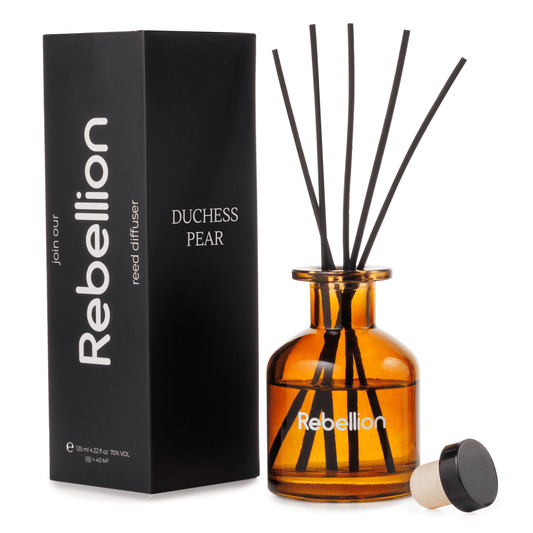
- Reed diffusers with a natural base — provide uniform passive fragrancing for weeks; suitable for background scent in any room
- Sprays based on hydrolats and essential oils — immediate effect; convenient for refreshing air, bedding, wardrobe
- Aroma sachets with dried plants and herbs — delicate long-lasting fragrancing for closets, drawers, small enclosed spaces
- Natural incense and resins — resinous, woody, or herbal; used for ritual or meditative spaces
When choosing a format, focus not only on your own preferences but also on the needs of the specific room. For a child's room, a chamomile hydrolat spray will be safer than a candle. For an office, an aroma diffuser with eucalyptus or peppermint essential oil will be more effective than a passive sachet. The right format is half the battle in home aromatherapy.

Natural aromatherapy for various tasks
One of the main principles of natural aromatherapy is that the aroma should match the state you want to maintain or change. There is no "best home fragrance" in an abstract sense – there is a fragrance that meets a specific goal at a specific moment. It is this precision that distinguishes the conscious use of natural fragrances from randomly placing candles around the apartment with the hope that "it will smell good."
- Relaxation and anxiety reduction — lavender, chamomile, neroli, frankincense, sandalwood
- Concentration and clarity of thought — lemon, peppermint, rosemary, eucalyptus, cypress
- Mood and energy boost — orange, grapefruit, bergamot, ylang-ylang
- Quality sleep — lavender, vetiver, sandalwood, atlas cedar, myrrh
- Air purification and antibacterial effect — tea tree, eucalyptus, pine, thyme
- Romantic atmosphere — rose, jasmine, ylang-ylang, patchouli, amber
It's important to start with low concentrations — especially if you haven't practiced natural aromatherapy before. Pure essential oils are very concentrated: for a home diffuser, 3–5 drops per 100 ml of water are usually sufficient. Over-saturating the aroma does not enhance the effect — on the contrary, it can cause headaches or olfactory fatigue. Natural aromatherapy is about subtlety, not intensity.
Natural home fragrances: how to choose a quality product
The market for natural home fragrances today is diverse and not always honest. The word "natural" on the packaging is not a guarantee of quality: it can mean the presence of one plant extract among a dozen synthetic components. To truly buy a natural home fragrance, you need to know what to look for first.
The first and most important guideline is the composition. For essential oils, it should be as simple as possible: one hundred percent essential oil of a specific plant, possibly with an indication of the country of origin and extraction method (steam distillation, cold pressing). For candles – vegetable or beeswax as a base, essential oils as a fragrance, cotton or wooden wick. Any "fragrance oil", "aroma concentrate", or "perfume composition" in the ingredients is synthetic, regardless of the product's positioning.
The second guideline is price. High-quality natural fragrances cannot be symbolically cheap – natural raw materials are expensive to produce. If a candle on a "100% natural soy base with essential oils" costs the same as a regular paraffin candle – that's a reason to read the ingredients more carefully. An adequate price is an indirect but important signal of quality in this segment.

Where and how to use natural home fragrances
Proper placement of natural fragrances in space is not a matter of aesthetics, but of effectiveness. A diffuser placed in the corner of a large room will have minimal effect – the scent simply won't reach a person due to poor air circulation. A candle under the ceiling in a drafty room will "burn out" faster and scent the space much worse than the same candle at 80–100 cm from the floor near the central airflow.
- Place diffusers at a height of 80–120 cm from the floor, where air circulation is most active
- Do not place candles near vents or air conditioners — the airflow will accelerate burning and distort the scent
- In high-traffic areas (hallway, corridor), passive forms are more suitable: sachets, reed diffusers
- In rest and sleep areas, avoid electric diffusers with timers — use passive forms instead to avoid oversaturating an enclosed space
- Do not combine more than two different scents in one space — this nullifies their individual effect and creates illegible olfactory "noise"
For those just starting to explore natural aromatherapy and wanting to buy a home fragrance for the first time, the best start is one essential oil in an ultrasonic diffuser or one natural candle in the bedroom. Give yourself time to get used to a conscious attitude towards scent at home before expanding your collection and diversifying your space.
Seasonal aromatherapy: how to change home fragrances throughout the year
Natural aromatherapy lives in the rhythm of the seasons – and this is not a romantic metaphor, but a practical recommendation. Our sense of smell and our perception of scents are significantly influenced by air temperature, humidity levels, and the general physiological state of the body, which also follows seasonal cycles. That's why natural home fragrances you choose in autumn might seem "heavy" and "stifling" in summer – and vice versa.
Spring and summer are a time for light, fresh, and aquatic scents. Citrus essential oils, green herbal notes, floral accords from rose or chamomile hydrolats. They do not overload the perception in the heat and maintain a feeling of freshness in the room even without air conditioning. Natural home fragrances in the warm season are best chosen in the form of light sprays or diffusers with water – they do not provide excessive concentration.
Autumn and winter are the season for deep, warm, and "hugging" aromas. Resins, wood, vanilla, cinnamon, frankincense – these natural fragrances create a feeling of warmth and security, which is especially valuable in the cold season. Soy-based candles with winter essential oils or aroma diffusers with resinous essences become the true center of home comfort. The main thing is not to overdo the concentration in enclosed, unventilated spaces during the winter season.
Natural aromatherapy – a way to make your space your own
Natural aromatherapy and natural home fragrances are not a trend or a whim. It is a return to a basic, yet very precise understanding: the space we live in affects how we feel, and aroma is one of the most powerful and, at the same time, most delicate tools of this influence. When you buy a home fragrance of natural origin, you are not just refreshing the air; you are consciously tuning your own space to a certain state and a certain mood.
Start gradually, choose quality and natural products, and listen to your own feelings more than external ratings. A natural aroma that soothes you is more valuable than a dozen "correct" essential oils whose composition your body is indifferent to. Aromatherapy is a personal dialogue with space, and it deepens with every conscious choice.