Rosacea and acne: sensitive facial skin care
Persistent redness, a feeling of heat, small vascular "spider veins," and inflammatory elements on the face — all these are familiar manifestations of rosacea, also known as acne rosacea. This chronic condition can significantly affect not only appearance but also well-being and self-confidence, making proper rosacea care a daily necessity, not a whim. Understanding the nature of the disease and properly selected cosmetics for sensitive skin help keep symptoms under control and restore a comfortable, calm appearance to the face.
What is rosacea and why does acne rosacea appear?
Rosacea is a chronic skin disease that most often affects the central area of the face: cheeks, nose, forehead, and chin. Acne rosacea develops gradually: first, the skin begins to blush easily from the slightest irritants, then the redness becomes persistent, and later vascular networks, swelling, and inflammatory papules may appear. That is why rosacea care must take into account not just one symptom, but the entire complex of manifestations that change over time.
The exact cause of acne rosacea is still being studied, but experts agree that it is based on a combination of genetic predisposition, impaired vascular function, and a weakened skin barrier. Sensitive skin with rosacea reacts sharply to external factors because its ability to retain moisture and resist irritants is reduced. Because of this, familiar products that previously caused no problems suddenly begin to irritate, sting, or intensify redness.
It is important to understand that acne rosacea is not a consequence of poor hygiene and not "ordinary acne," although inflammatory elements may look similar externally. Because of this, aggressive cleansing or drying agents for pimples only harm here, increasing reactivity. Rosacea skin care is based on a different principle: not "dry out and destroy," but soothe, moisturize, and restore the barrier so that the skin gradually becomes more resistant to irritants.

Key rosacea symptoms to recognize in time
Early diagnosis of rosacea significantly facilitates further care, as in the initial stages, symptoms are reversible and respond well to correction. The earlier a person pays attention to alarming signs and reviews their facial care routine, the less likely it is that the condition will progress to a more severe, persistent form with pronounced vascular changes.
Classic manifestations of acne rosacea usually unfold gradually and are easily confused with ordinary sensitivity or a reaction to the weather. Among the most common symptoms of rosacea to pay attention to are:
- persistent or periodic redness of the central part of the face that does not go away for hours;
- a sensation of heat, tingling, or burning of the skin without visible cause;
- the appearance of vascular "spider veins" and dilated capillaries on the cheeks and sides of the nose;
- small inflammatory papules and pustules, similar to pimples, but without blackheads;
- dryness, flaking, and increased reaction even to mild cosmetics.
If you notice several of these signs simultaneously, it is a reason to review your rosacea care and consult a dermatologist. Cosmetics for sensitive skin can significantly alleviate the condition, but an accurate diagnosis and, if necessary, medical treatment are prescribed only by a doctor. Self-“guessing” remedies based on similar symptoms often prolong the problem, while professional consultation saves time and nerves.
Triggers that exacerbate redness in acne rosacea
One of the key features of rosacea is sensitivity to so-called triggers – external and internal factors that provoke flare-ups of redness. Each person's set of triggers is individual, so proper skin care for acne rosacea begins with observing one's own reactions. Keeping a short diary where you record what makes your face red helps quickly identify patterns.
In practice, most rosacea exacerbations are associated with several typical provocateurs that should be learned to control. The most common triggers that increase redness and skin sensitivity are:
- sharp temperature changes, heat, frost, hot showers, and saunas;
- ultraviolet light and prolonged sun exposure without protection;
- spicy food, hot drinks, alcohol, and excessive caffeine;
- stress, intense physical exertion, and lack of sleep;
- aggressive cosmetics with high alcohol content, acids, and abrasives.
It is impossible to completely avoid all triggers, and it is not necessary – the goal is to reduce their cumulative effect. When you know your provocateurs, it is easier to build a rosacea care routine so that the skin receives support exactly when it is most vulnerable. For example, before going out into the cold, you should apply a nourishing cream in advance, and on a hot day, do not forget about sun protection and light moisturizing.

How to build a rosacea care routine: basic principles
Effective care for rosacea-prone skin is based on the principle of delicacy and consistency. Rosacea does not like abrupt experiments, so any new products are introduced gradually, one at a time, observing the reaction for several days. This cautious approach allows you to timely notice what exactly doesn't suit you and not overload already reactive skin with several active ingredients at once.
A basic routine for rosacea includes three essential steps: gentle cleansing, restorative moisturizing, and sun protection during the day. Cleansing should be so delicate that it does not leave a feeling of tightness or "squeaky clean" – this is a sign of over-drying. Moisturizing is responsible for barrier restoration and comfort, and sun protection shields blood vessels from ultraviolet radiation, which is one of the strongest triggers for redness.
In addition to the products themselves, the technique of caring for sensitive skin is of great importance. Water for washing is chosen cool or slightly warm, the face is not rubbed with a towel, but only gently blotted, and frequent use of brushes, scrubs, and apparatus massagers is avoided. Such a gentle daily routine gradually reduces skin reactivity, and over time, the face reacts to usual irritants much more calmly.
Gentle cleansing for skin with acne rosacea
Cleansing is the foundation upon which all rosacea care rests, and at the same time, the step where it is easiest to cause harm. Many people habitually reach for drying gels and foams "for problematic skin," but with acne rosacea, such products disrupt the lipid barrier and provoke new redness. Instead, sensitive skin needs mild formulas without aggressive surfactants, alcohol, and harsh abrasives.
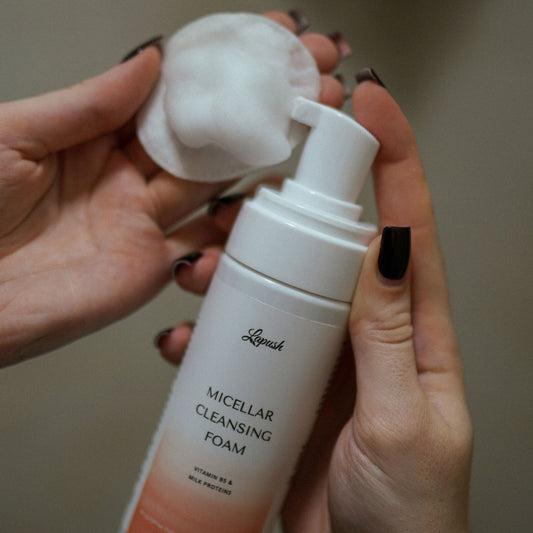
A good cleanser for rosacea-prone skin gently removes impurities and makeup residue without washing away the natural protective layer. Preference should be given to mild gels, foams, and micellar products with soothing ingredients, such as panthenol, aloe, or mild proteins. Cleansing should be done no more than twice a day – in the morning and in the evening, as excessive washing itself becomes an irritant for reactive skin.
In practice, it is useful to follow a simple rule: after cleansing, the skin should feel clean but comfortable, without tightness or burning. If the face "creaks" and you want to apply cream immediately, the product is too aggressive for acne rosacea. Gentle cleansing in combination with cool water sets the right tone for all subsequent sensitive skin care routines and prepares it for moisturizing and restoration.

Moisturizing and barrier restoration for sensitive skin
At the heart of rosacea care is moisturizing and restoring the protective barrier, because its weakening is what makes the skin so reactive. When the barrier is damaged, moisture quickly evaporates, and irritants easily penetrate inside, so the skin reacts acutely with redness and discomfort. Components related to the skin's natural lipids and soothing active ingredients help restore this "wall."
In the care of skin with acne rosacea, ingredients with proven soothing and barrier-restoring effects are especially valued. Among the components to look for in product formulations are:
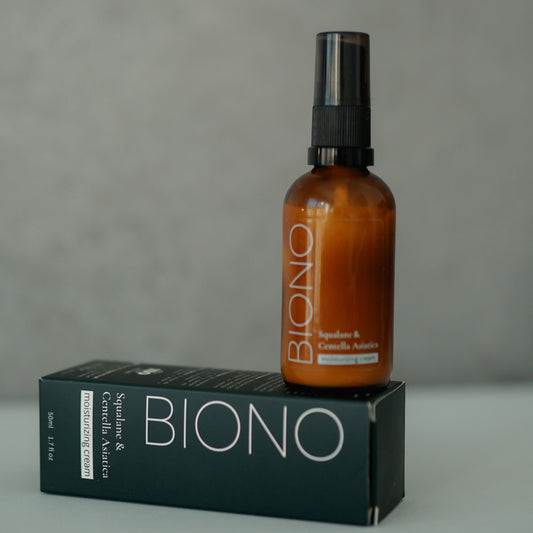
- Centella asiatica — a plant extract that helps reduce redness and soothe the skin;
- beta-glucan and aloe vera — maintain hydration and provide a feeling of comfort;
- ceramides — restore the lipid barrier and reduce moisture loss;
- panthenol and allantoin — soften and promote a feeling of calm;
- niacinamide and antioxidants — support an even tone and protect against external factors.
The texture of a cream for rosacea is chosen according to sensations: some people are more comfortable with a light emulsion, while dry, reactive skin needs a denser, nourishing care. The main thing is regularity: moisturizing works cumulatively, and a noticeable improvement in condition usually occurs only after several weeks of consistent care. Patience is rewarded here, because a strong barrier gradually makes the skin more resistant to triggers and less prone to flare-ups of redness.
Sun protection as an integral part of rosacea care
If you were to single out one step that most strongly influences the course of acne rosacea, it would be sun protection. Ultraviolet light not only causes immediate redness but also weakens blood vessels and accelerates the aging of already vulnerable skin. Therefore, sun protection for rosacea is not a seasonal recommendation for summer, but a daily habit throughout the year, even on cloudy days.
For sensitive skin with acne rosacea, mineral (physical) filters based on zinc oxide or titanium dioxide are often more comfortable, as they are less likely to cause irritation. The product is applied as the final step of the morning routine, over the cream, and reapplied throughout the day as needed. It is important that the formula is free of alcohol and heavy fragrances, which can be additional triggers for reactive skin.
In addition to the cream itself, it is worth remembering physical protection methods: wide-brimmed hats, staying in the shade during peak sun activity, and avoiding prolonged sunbathing. The combination of a quality sunscreen product with sensible sun behavior significantly reduces the frequency of exacerbations. It is often underestimated SPF that becomes the missing link, without which the rest of the rosacea care does not yield the expected results.
Common mistakes in caring for acne rosacea
Even with the best intentions, it's easy to make mistakes that negate all rosacea care. Most often, harm is caused by the desire to "cure" redness quickly and radically – with aggressive acids, frequent peels, or alcohol-based toners. Such tactics provide a short-term cleansing effect but actually destroy the barrier even more, making the skin increasingly reactive.
Another common mistake is overloading the routine with a large number of active products at once. When a person, in pursuit of results, immediately adds several serums, acid-based care, and new creams, skin with rosacea simply does not have time to adapt. As a result, instead of improvement, burning, flaking, and new flare-ups of redness appear, and it becomes almost impossible to understand what caused the reaction. Delicate, minimalist care always wins out over complex multi-step schemes here.
The third pitfall is ignoring professional help and trying to deal with rosacea solely with cosmetics. Quality products for sensitive skin perfectly maintain the condition, reduce discomfort, and improve the appearance of the face, but they do not replace treatment. For pronounced redness, inflammatory elements, or vascular changes, you should consult a dermatologist who will select therapy and advise on how to harmoniously combine it with home care. The combination of competent cosmetics and medical supervision gives the most stable and long-lasting result.
Summary: calm skin - the result of consistent care
Rosacea and acne rosacea are not a sentence, but a condition that can be lived with comfortably if you build a competent and gentle skin care routine. Delicate cleansing, deep moisturizing with an emphasis on barrier restoration, and daily sun protection form the foundation that gradually reduces reactivity and restores a calm, even appearance to the face. The key to success is not aggressive methods, but consistency, attentiveness, and respect for the needs of sensitive skin.
Remember that every face is unique, so the ideal rosacea care routine is formed by carefully observing your own triggers and reactions. Combine proven sensitive skin cosmetics with dermatologist consultations, introduce new products gradually, and give your skin time to respond to care. This strategy helps not only tame redness and acne rosacea but also maintain a healthy, well-groomed complexion for a long time.