Aroma Marketing for Business: How to Build Customer Loyalty
Scent is one of the most powerful communication channels with a customer, though it is often underestimated. While brands compete in visual design and audio accompaniment, olfactory influence remains a subtle tool that shapes impressions even before the seller’s first word. That is why a well-designed aroma space has long transformed from a luxury item into an essential component of the customer experience, capable of directly impacting the average check, repeat visits, and overall brand perception.
Aromamarketing as a tool for sensory branding
Aromamarketing is a comprehensive discipline that studies how scent influences emotions, memory, and purchasing decisions. Unlike casual air freshening, it is based on a scientific approach: the selection of the composition is tailored to the target audience, brand positioning, and room characteristics. Neuromarketing research has long proven that olfactory memory is more enduring than visual memory, meaning that one well-chosen scent can evoke an association with a brand months after the first contact.
Practice shows that aromamarketing works in large shopping centers as well as in small beauty salons, coffee shops, hotels, or showrooms. Its main advantage is its unobtrusiveness: a visitor may not consciously perceive the presence of a scent, but subconsciously perceives the space as cozy, premium, or energetic. This "invisible" impression translates into loyalty, recommendations, and repeat visits.
What is aromamarketing and why it works
The influence of scent on human behavior is explained by the anatomy of olfaction. Olfactory signals go directly to the brain's limbic system—the area responsible for emotions and long-term memory. This distinguishes scent from other senses: it does not pass through the filters of rational analysis but directly forms an emotional background. That is why a room’s aroma evokes feelings of trust, calm, or a desire to linger faster than any visual element.
The commercial value of this property is confirmed by concrete figures. In many industries, implementing a thoughtful aromatic background increases customer stay time in a store by 15–20% and the average check by 6–11%. The effect is especially noticeable in areas where purchasing decisions depend on mood: clothing boutiques, confectionery stores, cosmetic shops, and spa salons. Here, scent acts as an additional salesperson who never tires and is never intrusive.
It is important to understand: aromamarketing is not just a pleasant smell in the air. It is a strategy that considers seasonality, time of day, visitor flow, room ventilation, and the emotions the brand wants to evoke. An incorrectly chosen composition can have the opposite effect—cause headaches, allergic reactions, or an association with low quality. Therefore, the choice of aroma is approached as carefully as the development of a logo or music branding.

Aromamarketing products: what the professional market chooses
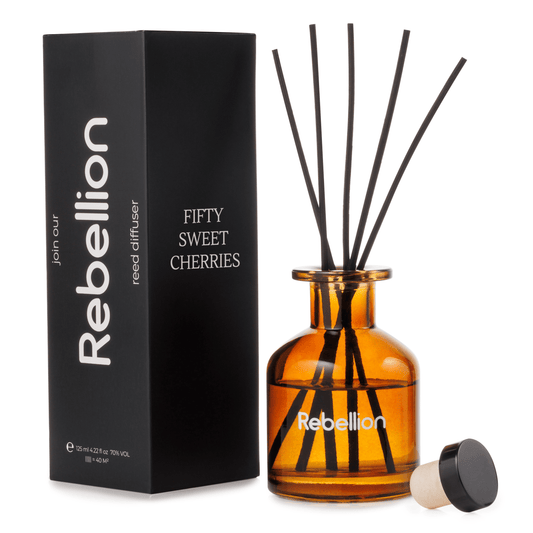
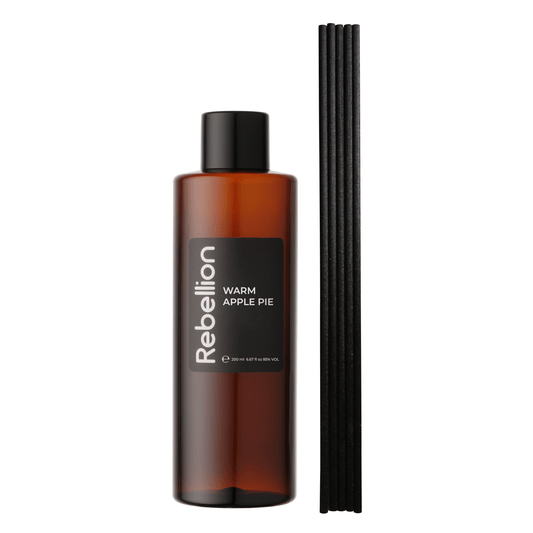
The segment of space scenting is rapidly developing, and today aromamarketing products are represented by a very wide range—from miniature home diffusers to industrial systems that serve thousands of square meters. Understanding this classification helps business owners avoid spending their budget on excessive or unsuitable solutions.
In the professional segment, several basic categories of equipment and consumables are typically distinguished:
- Cold-mist aroma diffusers—the most popular solution for boutiques, hotels, and offices, as they do not use heat and preserve the original note of the composition.
- HVAC integration systems—optimal for large premises, retail halls, and public spaces where uniform scent distribution is required.
- Portable aroma diffusers—suitable for meeting rooms, premium cars, demonstration zones, and temporary exhibitions.
- Oil and water-based concentrates—the foundation of the economy: the right quality of concentrate determines the longevity and purity of the scent.
- Accessories and consumables—filters, cartridges, nozzles that ensure stable system operation.
The choice of a specific product always depends on three factors: the area of the premises, the flow of people, and the nature of the space. In an intimate cosmetics boutique, one compact diffuser may suffice, while a retail space of several hundred square meters requires a systematic approach with multiple spray points and centralized control. That is why it is advisable to consult with specialists before purchasing to calculate the optimal configuration.
Aromamarketing for business: how scent increases sales
When it comes to aromamarketing for business, it's not just about customer comfort but a very specific monetization tool. Scent influences the perception of product quality, willingness to wait in line, trust in staff, and even price category assessment. In retail, this is well illustrated by the "premium note" principle—in a store with a warm woody-vanilla composition, the same products are perceived as more expensive and desirable.
From a business process perspective, an aromatic solution is integrated into the overall customer experience strategy. It enhances visual merchandising, supports the tone of communication, and builds brand recognition at a sensory level. In chain formats, this is particularly valuable: a customer entering any location immediately recognizes the familiar scent and subconsciously trusts the space even before seeing the logo.
The financial return on implementation is most often reflected in three metrics: growth in average check, increase in repeat purchases, and improved brand perception in reviews. Therefore, experienced owners view aromamarketing for business not as an expense but as an investment with a measurable ROI that pays off within a few months after correct implementation.
Aromamarketing for the office: an atmosphere that enhances productivity
Office space is a separate application area where scent works not for sales but for the well-being of employees and guests. It is proven that a correctly chosen composition reduces stress levels, improves concentration, and decreases the feeling of fatigue at the end of the workday. Therefore, aromamarketing for the office has become a natural part of modern corporate culture, especially in companies that care about team well-being.
Among the tasks that workplace scenting typically solves are:
- Increased concentration during analytical work (citrus, mint notes).
- Stress reduction in meeting rooms (woody, herbal compositions).
- Creation of a welcoming atmosphere in receptions and guest areas.
- Masking technical odors from printing rooms, kitchens, server rooms.
- Formation of a recognizable "aroma face" for the company to visitors.
Practice shows that employees who work in moderately scented premises complain less about headaches and drowsiness in the afternoon. At the same time, it is important to maintain balance: office aromamarketing should not be intrusive, otherwise the effect will be counterproductive. Professional systems are precisely calibrated to account for work schedules, the number of people, and ventilation times.

How to choose a scent for an industry and audience
Successful implementation begins with the right choice of composition. A dental clinic and a coffee shop require fundamentally different notes: in the first case, it is important to reduce patient anxiety, in the second—to emphasize warmth and appetizing qualities. The general rule is: the scent must match the brand's promise and the expectations of the specific visitor segment.
Female-oriented spaces are more likely to respond to floral, fruity, and sweet compositions, while in men's showrooms, woody, leather, and tobacco accords work better. However, stereotypes should not be taken literally: a modern audience appreciates non-standard solutions, and a unique scent can become a competitive advantage. An example from practice: a small chain of cosmetic stores ordered a custom composition with fig and cedar notes and, within a year, gained a strong association: "this scent is precisely your store."
Another important factor is seasonality. In winter, warm, spicy, and gourmand notes work effectively; in spring, fresh green and aquatic accords are more appropriate; in summer—citrus, and in autumn—woody and spicy. Such changes not only refresh the impressions of regular customers but also create an informational reason for communication on social media.
Scenting equipment: what to look for when choosing
The effectiveness of the entire strategy depends on the technical solution no less than on the composition itself. Quality scenting is only possible when the system dispenses the concentrate evenly, without sharp peaks and drops in intensity. That's why experts advise not to skimp on the diffuser—the cost of the equipment quickly pays for itself through economical concentrate usage.
When choosing equipment, it is worth evaluating the following characteristics:
- Coverage area and the ability to adjust spray intensity.
- Diffusion technology (cold technology preserves notes better than heating).
- Noise level—a critical indicator for offices, libraries, medical facilities.
- Availability of a timer and work schedule for days and peak hours.
- Compatibility with concentrates from different manufacturers.
- Maintainability and availability of service.
Practical advice: before purchasing a system, it is worth testing it in real room conditions. Even certified equipment can behave differently depending on ceiling height, ventilation power, or the presence of air conditioning. A test period of 7–14 days usually allows one to understand if the solution is suitable for a specific location.
Typical mistakes when implementing aromatic solutions
Despite the simplicity of the idea, implementation is often accompanied by mistakes that devalue all efforts. The most common one is oversaturation of the space. When the owner feels that the scent is "not noticeable enough," they increase the dose and create a suffocating atmosphere that makes people want to leave quickly. The professional standard is a scent that is barely perceptible but stable throughout the operating time.
The second common mistake is neglecting testing among the target audience. The owner might choose a composition that they personally like but does not resonate with customers. To avoid this, it's worth conducting brief A/B testing: comparing behavioral metrics on days with different scents or in several locations within a chain.
The third typical problem is a lack of systematic approach. When scenting is only turned on before management arrives or during promotional campaigns, the effect is not formed. Scent becomes part of the brand only when the customer encounters it every time, and it is stability that creates the olfactory memory for which everything was conceived.
How to measure the effectiveness of aromamarketing
Although scent seems an intangible asset, its impact is entirely measurable. The simplest method is to compare key metrics before and after the system launch: average check, time spent in the store, visitor-to-buyer conversion, and repeat visit rate. A period of 4–8 weeks is sufficient to see a stable dynamic.
The second level of analytics is customer and employee surveys. Questions are formulated indirectly: how do you rate the atmosphere of the space, do you feel comfortable in the premises, what did you remember most. If respondents start mentioning the scent among strong impressions, it indicates successful integration of the scent into the overall brand perception.
The third level is qualitative interviews and focus groups, which allow understanding deep associations and adjusting the strategy. For large networks, this approach pays off many times over: a discovered "signature" composition becomes a brand asset for many years and provides a stable competitive advantage that is difficult to copy.
Scent as a strategic investment in brand recognition
Sensory communication channels have long ceased to be just an additional tool—today they form the core of the customer experience. A well-chosen scent works for the brand 24/7: it greets the visitor, accompanies them during selection, and remains in memory longer than a banner or an advertising slogan. Therefore, businesses that view scenting as a purely tactical element often underestimate its real potential to influence profits.
Those planning to integrate aromatic solutions into their space should start with a clear brief: define the goal, audience, emotional core of the brand, and technical parameters of the premises. Next comes testing the composition and equipment in real conditions, followed by the scaling stage. Such a consistent approach guarantees that the investment in scent will turn into a stable business result, rather than remaining another experiment without proven returns.