Home perfumes: how to create a memorable fragrant atmosphere
Scents have a unique ability to influence our emotions, mood, and even productivity. The right home fragrances can transform an ordinary room into a cozy oasis of peace, stimulate creativity in the office, or create a romantic atmosphere for a special evening. The modern home fragrance market offers much more than traditional candles and air fresheners - these are sophisticated compositions from leading perfume houses, innovative diffusers with natural oils, and exclusive fragrances that become part of your personal style. Scenting a space is an art that requires knowledge of notes, intensity, and combinations of scents to create a harmonious olfactory experience.
Home Perfumes: The Evolution of Home Aromatherapy
The culture of scenting living spaces has existed for millennia — from incense in ancient Egypt to potpourri in Victorian England. Modern home fragrances have evolved from primitive air fresheners to true olfactory compositions created by world-class perfumers. Leading luxury brands — Diptyque, Jo Malone, Byredo, Maison Francis Kurkdjian — produce home collections that are as sophisticated and sophisticated as personal perfumes. It is no longer just about masking unwanted odors, but creating a multi-layered aromatic atmosphere that unfolds throughout the day.
The psychological impact of scents on humans has been scientifically proven. Smells are processed by the limbic system of the brain, which is responsible for emotions and memories, so certain scents can instantly change mood, reduce stress levels, or increase concentration. Lavender and chamomile soothe and improve sleep quality, citrus notes tone and energize, woody scents create a sense of stability and comfort. Home perfumes allow you to manage your psycho-emotional state through olfactory stimuli, transforming your living space into a therapeutic environment.
The trend for home fragrances is growing exponentially — the market is growing by 8-10% every year. People are realizing the importance of creating a personalized space where every detail reflects their identity. The scent of the home becomes the owner's calling card, is remembered by guests and is associated with a sense of comfort and belonging. It is an investment not just in a pleasant smell, but in the quality of life and emotional well-being of all residents.

Types of home perfumes: find your format
Aroma diffusers
Diffusers with rattan sticks are the most popular format for home perfumery due to their ease of use and long-lasting effect. The principle of operation is based on the capillary effect: porous reed sticks are immersed in a bottle with aromatic liquid and slowly evaporate the perfume base into the air. High-quality diffusers work for 2-4 months without intervention, providing a constant delicate aroma. The intensity is regulated by the number of sticks - more sticks give a stronger smell, fewer - a barely noticeable trail.
Diffuser compositions are created on an alcohol or oil basis with the addition of essences and synthetic aroma molecules. Home perfumes in diffuser format are ideal for the living room, bedroom or office - rooms where a stable background aroma is needed without sudden changes in intensity. Premium brands offer designer glass bottles, which in themselves are a decorative element of the interior. It is important to place the diffuser on a stable surface away from open fire and direct sunlight, which accelerate evaporation.
The cost-effectiveness of diffusers depends on the volume, quality of raw materials and storage conditions. A 100 ml bottle lasts 1-2 months, a 200 ml bottle lasts 3-4 months when using 6-8 sticks. In rooms with intensive ventilation or near open windows, the liquid evaporates faster. To extend the service life, turn the sticks over once a week - this renews the aroma without additional liquid consumption. High-quality home perfumes in diffuser format cost from 800 to 5000 UAH, depending on the brand and volume.
Scented candles
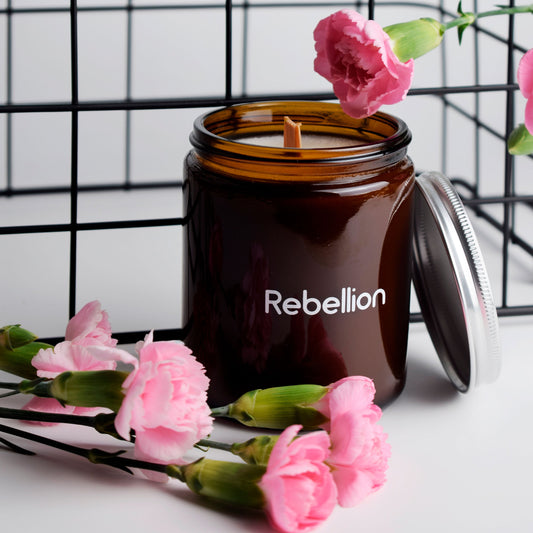
Candles remain a classic of home aromatherapy thanks to the combination of visual and olfactory experience. The soft flicker of the flame creates an atmosphere of comfort, and the perfumed wax fills the room with aroma. High-quality candles are made from natural soy, beeswax or coconut wax, which burns cleaner and longer than paraffin. The cotton wick without metal wire ensures even burning without black smoke and soot. The burning time depends on the size - mini candles 20-25 hours, standard 40-60 hours, large 90-120 hours.
Home candle compositions have a three-stage structure, like personal perfumes: the top notes are felt for the first 15-30 minutes, the heart notes open up within an hour, and the base notes last until the end of burning. Home candle fragrances are most effective in small spaces — bedrooms, bathrooms, dining rooms. For uniform wax melting, the first lighting should last at least 2 hours so that the surface is completely melted — this prevents the "tunnel" effect, when the wax burns only around the wick.
Candle safety is critical. Never leave a lit candle unattended, place it on a heat-resistant surface away from flammable materials and drafts. Trim the wick to 5-7 mm before each lighting for clean burning. Luxury brands produce candles in designer glass or ceramic cups, which after burning can be used as vases or organizers. The price range is wide - from 200 UAH for mass market to 3000+ UAH for niche perfumery.
Sprays and aerosols
Aromatic sprays provide an instant effect and are ideal for quickly refreshing a space before guests arrive or after cooking. Unlike diffusers and candles, which operate continuously, sprays give you control over the time and intensity of aromatization. High-quality compositions contain a high concentration of perfume oils - 10-15%, which ensures the aroma lasts for 2-4 hours. Alcohol-based formulas evaporate faster and spread throughout the room, water-based ones are milder and suitable for allergy sufferers.
Home perfumes in spray format are multifunctional - they can be used to freshen textiles (curtains, carpets, furniture upholstery), bed linen, wardrobe or car interior. Some brands offer specialized lines for different rooms: energetic citrus for the kitchen, soothing lavender for the bedroom, fresh marine for the bathroom. The spraying technique affects the effectiveness - hold the bottle at a distance of 30-40 cm from the surface, spray upwards in the air so that the drops settle evenly in the space.
Sprays are less economical than diffusers — a 100 ml bottle lasts 2-4 weeks with daily use. However, they are indispensable for spot aromatization and the ability to change scents depending on your mood or event. Avoid cheap aerosols with aggressive synthetic fragrances — they can cause headaches and allergic reactions. Natural home sprays starting at UAH 400 contain essential oils and safe preservatives.

How to choose home perfumes by room type
Each room has its own purpose and atmosphere, so the scents should be chosen accordingly. In the living room, where the family gathers and guests are received, universal compositions that most people like are appropriate - fresh citrus, woody accords, floral-green bouquets. Avoid too sweet or heavy scents that can be tiring after a long stay. Home perfumes for the living room should be comfortable and unobtrusive - no one should feel discomfort from an overly intense smell.
The bedroom requires special delicacy in choosing a fragrance, because this is where we spend a third of our lives. Soothing notes of lavender, chamomile, sandalwood, vanilla and warm musk contribute to relaxation and quality sleep. Studies confirm that lavender reduces heart rate and blood pressure, creating ideal conditions for relaxation. The intensity of the aroma should be minimal - use 3-4 reed sticks instead of 8-10 or light a candle an hour before bedtime and extinguish it before falling asleep.
The kitchen needs fresh and energetic scents that neutralize food odors and stimulate the appetite. Citrus compositions (lemon, grapefruit, bergamot), spicy notes (cinnamon, cardamom, ginger) and herbal accords (basil, mint, rosemary) are ideal for this space. Home perfumes for the kitchen should be intense enough to interrupt the culinary aromas, but not conflict with them. The bathroom is the territory of clean aquatic, marine and ozone notes, which are associated with freshness and hygiene.
Fragrance notes and families: understanding perfumery
Citrus compositions
Citrus scents are the most versatile and popular for home perfumery. Notes of lemon, orange, grapefruit, bergamot and yuzu provide energy, improve mood and create a feeling of cleanliness and freshness. Scientific studies show that the aroma of citrus fruits increases levels of serotonin - the hormone of happiness - and reduces the concentration of cortisol, the stress hormone. This makes citrus compositions ideal for morning aromatization, offices and rooms where concentration is required.
Citrus notes are volatile and evaporate quickly, so they are often combined with woody or green accords for durability. Home perfumes with a combination of lemon and verbena refresh in the heat, grapefruit with ginger tones in the winter, mandarin with cinnamon creates a festive atmosphere. It is important to understand that natural citrus essences are photosensitive and can lose intensity under the influence of sunlight. Store diffusers with citrus compositions in shaded places to preserve the aroma.
Citrus perfumes are universal for all rooms, except the bedroom - their energy can interfere with relaxation and falling asleep. They perfectly neutralize the smells of tobacco, pets and humidity. For kitchens and bathrooms, this is the best choice due to the association with cleanliness and hygiene. The price segment of citrus compositions is wide - from budget options to exclusive blends with rare varieties of yuzu or bergamot from Italian Calabria.
Flower and tree bouquets
Floral notes are the most diverse and complex category in perfumery. From delicate freesia and peony to sensual rose and jasmine, each flower has a unique character. Floral home fragrances create a romantic, sophisticated atmosphere and are associated with femininity and elegance. However, purely floral compositions can be too sweet or heavy, so modern perfumers combine them with woody, green or fruity notes for balance.
Woody accords — sandalwood, cedar, patchouli, vetiver — add depth, warmth and stability to the composition. They create a feeling of reliability, coziness and natural comfort. Woody-floral blacks are universal for the autumn-winter season, when you want warmth and enveloping aromas. The combination of rose and oud (agarwood) is considered one of the most luxurious in perfumery, musky rose with patchouli creates a sensual atmosphere, white flowers with cedar — elegant freshness.
The complexity of floral-woody compositions means that the fragrance unfolds in layers over time. First, bright floral top notes are felt, then the heart bouquet appears, and finally the warm woody base opens. This type of home perfume works best in living rooms, bedrooms, and offices, creating an atmosphere of sophistication and well-being. Invest in quality compositions from niche perfume houses - they use natural essences instead of cheap synthetic substitutes.
Tips for placement and use
Proper placement of fragrances maximizes their effectiveness and saves your budget. Diffusers and candles work best at a height of 50-100 cm from the floor - warm air flows naturally rise, spreading the aroma throughout the room. Place them away from open windows and air conditioners, which disperse the smell and accelerate evaporation. Home fragrances are more effective in rooms with moderate ventilation - in a room where the windows are constantly open, the aroma simply evaporates.
The number of fragrances depends on the area of the room. For a standard room of 15-20 m², one diffuser or medium-sized candle is enough. Large living rooms of 30-40 m² may require two fragrance sources, placed at opposite ends for even distribution. Do not overdo it with the amount - excess creates pressure on the olfactory receptors and can cause headaches. It is better to use a high-quality intense fragrance in one spot than several weak sources at the same time.
Rotate scents every 2-3 months to prevent olfactory fatigue, a phenomenon where your brain stops noticing a constant scent. This doesn’t mean the scent is gone, it’s just that your olfactory system has adapted. Guests will smell it just as vividly as they did on day one. Home fragrances from different families can be rotated seasonally: light citrus and marine in summer, warm gourmand and woody in winter, floral-green in spring and fall. This rotation maintains interest and follows natural cycles.

7 rules for creating the perfect fragrant atmosphere
- Don't mix more than three scents in one space—too many creates olfactory chaos. One main scent for the living room, another for the bedroom, and a third for the bathroom—that's enough.
- Start with minimal intensity—it's always easier to add more reeds to a diffuser or light an extra candle than to fix an oversaturation of the scent in a room.
- Adapt your scents to the season—what smells great in winter (vanilla, cinnamon, cedar) may be stuffy in summer. Follow natural cycles for harmony.
- Consider the purpose of the room—energetic notes for the office, calming for the bedroom, fresh for the bathroom. Home fragrances should support the function of the space.
- Store your fragrances properly — away from direct sunlight, heat sources, and humidity. This will extend their lifespan and preserve the quality of the composition.
- Invest in quality, not quantity—one premium diffuser is better than three cheap air fresheners. Quality compositions are safe, sustainable, and really improve the atmosphere.
- Consider the allergies and sensitivities of residents - if someone in the family is prone to allergies, choose hypoallergenic formulas based on natural ingredients without synthetic fragrances.
Mistakes that destroy aromatic harmony
The most common mistake is using too many different scents at once. When there is a rose diffuser in the living room, a vanilla candle in the kitchen, and a lavender spray in the bedroom, it creates an olfactory cacophony. The scents mix in the hallways, conflict with each other, and create headaches instead of pleasure. Home fragrances work best when they are selected within the same olfactory family or are deliberately contrasted between rooms with clear boundaries.
The second critical mistake is ignoring quality in favor of price. Cheap synthetic air fresheners contain phthalates, formaldehyde, and other toxic compounds that can cause respiratory problems, allergies, and hormonal disruptions with prolonged exposure. Saving 200-300 UAH on a fragrance can cost thousands in treatment. Investing in quality home perfumes with natural essences and safe carriers is an investment in the health of the whole family.
The third mistake is irregular maintenance of aromatherapy diffusers. Diffusers require turning the sticks every week, candles require trimming the wick before each lighting, and sprays require shaking before use. Neglecting these simple steps reduces efficiency by 30-50%. Dirty or clogged sticks in the diffuser do not absorb liquid well, and a long wick creates an uneven flame and soot. Caring for aromatherapy diffusers takes 2-3 minutes, but it doubles their service life.
Natural essences vs synthetic home fragrances
Natural essential oils are obtained from plant materials by distillation, extraction or cold pressing. They contain hundreds of chemical compounds that create a multifaceted, vibrant aroma that changes and unfolds over time. Lavender essence from the fields of Provence smells different than from Bulgarian plantations, even if it is the same species of plant. Natural-based home perfumes have therapeutic properties - real lavender is truly soothing, eucalyptus makes breathing easier, mint stimulates cognitive functions.
However, natural essences have limitations. They are expensive — 10 ml of pure rose essence can cost 5000+ UAH due to the low yield of raw materials (3-5 tons of petals are needed for 1 liter of essence). They are photosensitive, oxidize and have a shorter shelf life. Some of your favorite scents simply do not exist in nature — a clean sea breeze, freshly laundered linen or book pages cannot be obtained from plants. This is where synthetic molecules created in the laboratories of perfume companies come to the rescue.
Modern synthetic aroma molecules are not the same as cheap chemical fragrances. They are high-tech compounds that can be identical to natural ones or create completely new olfactory impressions. They are more stable, persistent and safer - they do not cause pollen allergies or phototoxicity. The best home perfumes combine natural essences for depth and authenticity with synthetic molecules for stability and uniqueness. Read the ingredients and choose brands that transparently indicate the origin of the ingredients.
Seasonal aromatherapy: selection for the mood of the year
Spring is a time of awakening of nature, which is reflected in fresh green and floral-fruity aromas. Notes of green tea, freesia, lilac, hyacinth, freshly cut grass and rainwater create a feeling of renewal and lightness. After heavy winter compositions, one wants transparency and airiness. Home perfumes of the spring collection usually have an emphasis on top notes, which spread quickly and create an effect of freshness. Add notes of yuzu or rhubarb for a modern sound of classic floral bouquets.
Summer requires maximum lightness and freshness due to high temperatures. Citrus, aquatic, marine, cucumber and mint compositions create the illusion of coolness. Avoid sweet, heavy and musky aromas - in the heat they become suffocating and cause discomfort. Summer perfumes for the home have a high content of volatile top notes and a minimum of base notes so as not to create a feeling of heaviness. Ideal combinations: grapefruit with mint, sea salt with water lily, cucumber with green tea.
Autumn and winter are the season of warm, enveloping scents that compensate for the cold and short days. Spicy notes of cinnamon, cloves, nutmeg, vanilla, amber, woody accords and gourmet compositions (caramel, chocolate, coffee) create comfort and a sense of security. This is the time of rich, multi-layered perfumes that slowly unfold and last for hours. Classic winter combinations: cinnamon with orange, vanilla with sandalwood, cedar with incense, coffee with cardamom. Such scents are ideal for the festive season and creating a family atmosphere.
DIY aromatization: creating perfumes yourself
Home fragrance does not necessarily require the purchase of ready-made products. Essential oils, which are sold in pharmacies and specialty stores, allow you to create personalized compositions. The simplest DIY diffuser: a 50-100 ml glass bottle, 30% alcohol (or vodka), 70% water, 15-20 drops of essential oils and bamboo skewers. Mix the ingredients, dip the skewers - the basic diffuser is ready. Homemade home perfumes are economical and allow you to experiment with compositions.
Making candles takes more effort, but the result is worth it. Soy wax flakes, cotton wick, essential oils and a glass jar are the main components. Melt the wax in a water bath to 70-80°C, add essence (8-10% of the wax mass), pour into a mold with a fixed wick. Soy candles burn 30-50% longer than paraffin candles and do not emit toxins. Experiment with blends: lavender + rosemary for relaxation, orange + clove for comfort, eucalyptus + mint for freshness.
Potpourri is an ancient method of aromatization that is making a comeback. Dried flowers (roses, lavender, jasmine), citrus peels, cinnamon sticks, star anise, and whole spices are placed in a decorative vase and periodically refreshed with essential oils. This is an ecological and aesthetic method of aromatization that does not require electricity or fire. Home perfumes in the form of potpourri are ideal for those who appreciate natural living and want to add natural elements to their interior.
Future technologies: intelligent room aromatization
The home fragrance industry is actively integrating smart home technologies. Programmable electronic diffusers allow you to set a fragrance schedule — invigorating citrus in the morning, neutral in the afternoon, soothing in the evening. Some models are controlled via a smartphone, integrate with smart home systems, and can change the intensity depending on the presence of people in the room. The new generation of home fragrances adapt to your lifestyle automatically.
"Dry evaporation" technology is gaining popularity as an alternative to traditional methods. Ultrasonic diffusers break essential oils into microparticles that are dispersed by cold steam without heating. This preserves the therapeutic properties of the essences and is safer than the open flame of candles. Some models combine aromatherapy with ionization and humidification of the air, creating an optimal microclimate in the room.
Personalization reaches a new level with the ability to order exclusive compositions. Some brands offer consultations with a perfumer who will create a unique scent for your home, taking into account the preferences, interior style and psycho-emotional needs of the inhabitants. Home perfumes become as personal as personal perfumes, reflecting individuality and creating a unique olfactory identity of the space.
Memorable atmosphere
Choosing a perfume for your home is the art of creating an invisible but powerful element of the interior that influences emotions, memories and the overall perception of the space. Properly selected fragrances transform a dwelling into a real home, where each room has its own character and purpose. From fresh citrus for morning energy to soothing lavender for a night's rest - home perfumery allows you to manage the atmosphere and mood in a simple but effective way.
An investment in quality home fragrances will pay off with years of enjoyment, improved well-being, and unforgettable guest experiences. Experiment with different formats and compositions, find your favorite scent families, rotate seasonally, and remember safety and moderation. Your home deserves to smell as beautiful as it looks, because scent is the most powerful trigger of emotions and memories, making a space truly yours.