Niche home fragrances
Scent is the fastest bridge between the external world and internal state. It bypasses logic and immediately reaches the place where emotions, memories, and self-perception are stored. That’s why niche perfumery and niche home fragrances have ceased to be a privilege of a few and have become a conscious choice for people who want more — more depth, more individuality, more quality in every detail of their space. If you’ve never seriously considered what and why you apply to your skin or light up at home, this material will open up a completely different perspective on perfumery for you.
Niche perfumery today is not about fashion or a display of wealth. It's a personal statement that a person makes without words: about their values, tastes, and attention to detail. Those who choose a niche fragrance consciously opt out of the average "liked by everyone" in favor of "suits me." Niche perfumes and home fragrances become part of a lifestyle — just like choosing books, music, or the architecture of the space you live in. That's why getting acquainted with this segment is worthwhile for anyone who values the quality of their daily experience.
What is niche perfumery and where did it come from?
Niche perfumery is a segment of the fragrance market that develops outside the logic of mass production. Here, a fragrance is created primarily as an author's work, where the perfumer has complete freedom in choosing the concept, raw materials, and aromatic pyramid. No compromises for wide sales, no focus groups voting for a "neutral" sound. Niche perfumes are born from a specific idea and live their own lives, independent of trends.
The term "niche" comes from the English word niche — a narrow, specific market segment. In a perfumery context, this means limited editions, rare natural raw materials, a high price, and a narrow but very loyal audience. A niche fragrance doesn't try to please everyone at once. It simply exists — deep, unconventional, and honest about its composition and intentions.
The segment grew actively from the late 1980s, when consumers worldwide began to tire of the "twin effect" — a situation where different people smelled the same. The answer was niche perfumery: fragrances with character that aren't sold on every corner but stay with those who find them for a long time.

How niche perfumery differs from conventional perfumery
The main difference between niche and mass perfumery is not in price, but in the approach to creation. Mass fragrances go through a marketing filter: they are tested on a wide audience, adjusted to an "average" taste, and brought to market as a product that should appeal to the maximum number of people. A niche fragrance is born differently: one author, one idea, one aspiration — and a result that may not be to everyone's liking, but will captivate some forever.
Niche perfumes typically include natural and rare components: oud (agarwood), iris, absolutes of floral oils, amber, resins, and essences of rare woods. Commercial perfumery often replaces these components with synthetic analogues — they are stable and safe, but do not provide the depth and evolution that is the hallmark of true niche perfumery. A niche fragrance "lives" differently on the skin: it unfolds slowly, changes throughout the day, and smells uniquely on each person — depending on skin temperature, humidity levels, and even what you've eaten.
Longevity and sillage are another key distinction. Niche perfumery generally doesn't require reapplication throughout the day, as the concentration of aromatic substances in it is significantly higher. That's why the cost is justified: you're paying not for a beautiful bottle, but for the actual quantity of natural raw materials, the perfumer's skill, and the duration of the fragrance's sound on your skin.
Comparison of Niche and Mass Perfumery
| Criterion | Niche Perfumery | Mass Perfumery |
|---|---|---|
| Composition | Natural raw materials, rare components | Predominantly synthetic analogues |
| Circulation | Limited, small batch | Mass production |
| Target Audience | Narrow, specific | Broad, universal |
| Price | High | Accessible |
| Longevity | 8–16 hours | 3–6 hours |
| Development Approach | Author's concept | Marketing-oriented |
| Availability | Specialized stores | Mass retail outlets |
Top 10 Niche Perfumes: What Makes a Fragrance Iconic
Any ranking of niche perfumes is to some extent subjective — as the ideal fragrance depends on skin chemistry, personal associations, and even the season. However, there are objective criteria by which a fragrance achieves cult status in the niche segment: unique pyramid construction, mastery in combining notes, longevity, and, most importantly, the ability to evoke a specific emotion, not just a neutral "pleasant" smell.
The top 10 niche perfumes, consistently recognized in professional communities and among olfactory critics, include fragrances with the following characteristics:
- woody and resinous bases with oud, patchouli, or cedar
- floral hearts with natural absolutes of rose, jasmine, or iris
- citrus top notes with bitterness, saltiness, or a green accent
- untypical combinations — for example, leather and vanilla with a mineral note
- unisex concept without gender stereotypes
What unites all outstanding niche fragrances is their ability to tell a story. When a perfume has its own "character," feels different in the morning and evening, in summer and winter — that is the true sign of a top-tier niche perfumery. The top 10 niche perfumes should be seen not as a directive to buy, but as a map for personal exploration, a starting point, not a final destination.
Niche Home Fragrances: More Than Just a Candle
Niche home fragrances are a separate and very dynamically growing trend. If earlier home perfumery was perceived as a utilitarian means to eliminate unpleasant odors, today it is a full-fledged element of interior style and personal space. A home fragrance forms the "signature" of your home — that first feeling that guests experience even before they've had a chance to look at the interior.
Niche home fragrances differ from mass-market ones on the same principle as perfumes: quality of raw materials, complexity of composition, and attention to detail. Instead of a synthetic "vanilla" or "lavender" spray, there's a multi-layered olfactory pyramid that changes throughout the day and reacts to temperature and humidity in the room. This vibrancy is what makes niche fragrances so valued in the home space.
It is important to understand that niche home fragrances are an investment in atmosphere, not just an air freshener. A correctly chosen fragrance in the bedroom improves sleep quality, in the workspace — concentration, in the living room — hospitality and mood. This is not a marketing myth, but a fact confirmed by neuroscientific research: the sense of smell is directly connected to the limbic system of the brain, which is responsible for emotions, memory, and feelings of safety.
Niche fragrances for different rooms: what to put where
Each room in a house has its own function, its own rhythm, and its own requirements for fragrance. What works perfectly in the living room might be too heavy for the bedroom, and a delicate floral candle from the bathroom would get lost in a large open kitchen. There’s one rule: a niche home fragrance should enhance what the space is intended for, not contradict it. This is not an aesthetic whim — it's the functional logic of home scenting.
Here’s how to distribute niche home fragrances by room:
- Hallway — the first scent to greet everyone. Light woody or green notes: fresh, clean, yet with character. They set the tone for the entire home and leave a good first impression even before a guest steps into the living room.
- Living room — the main social room, where warm and inviting scents are appropriate: amber, musk, light spices, soft woods. They create a sense of coziness and comfort even in a large space.
- Bedroom — a zone of restoration. Here, soothing, unobtrusive scents are needed: lavender with vetiver, sandalwood, milky musk, or slightly powdery floral compositions. Avoid sharp citruses — they are invigorating and can interfere with falling asleep.
- Bathroom — a small but humid space. Fresh marine notes, citruses with a mineral accent, or green herbal fragrances will emphasize cleanliness and freshness without overpowering.
- Kitchen — a space where food smells dominate on their own. It's best to choose neutral and light fragrances here: mint, lemon, basil, clean cotton musk. They don’t compete with food but merely refresh the air.
- Home office or workspace — for concentration and clarity of thought, distinct green, citrus, or herbal notes are suitable: eucalyptus, bergamot, rosemary, cedar. They stimulate brain activity and help maintain focus for extended periods.
- Children's room — an absolute must is a natural composition without synthetics and without heavy resins or musks. Delicate floral or slightly fruity fragrances based on beeswax or cotton — safe and pleasant for children of any age.
- Yoga or meditation space — here, the fragrance should help you switch off and delve deeper into yourself. Palo santo, sandalwood, frankincense, or benzoin resin — fragrances with a long tradition of use in rituals of cleansing and calming the mind.
When choosing a niche fragrance for a specific room, also consider its area and ventilation. In small rooms, a diffuser with 3–4 reeds or a small-diameter candle is sufficient. In open spaces, the fragrance must be "loud" enough not to dissipate into the air — here, it’s worth combining several sources or choosing rich woody and resinous bases with good projection.

Formats of niche home fragrances
Niche home aromatics are available in several formats, and each is suitable for different needs and rooms. The choice of format is not a matter of taste, but of function. Before buying, it's worth understanding what logic you need: a constant background scent, the ritual of lighting a candle, or an immediate effect before guests arrive.
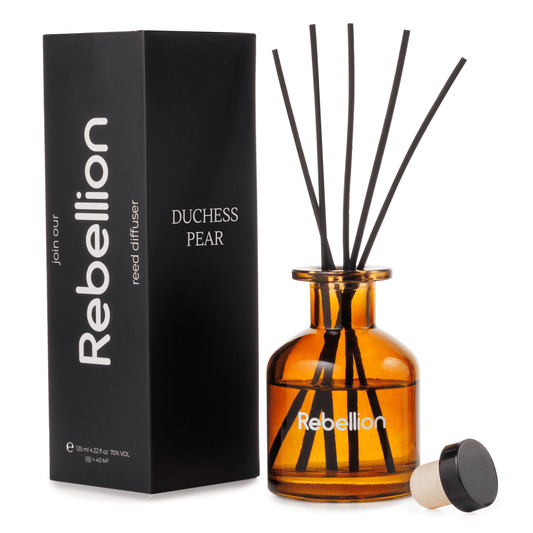
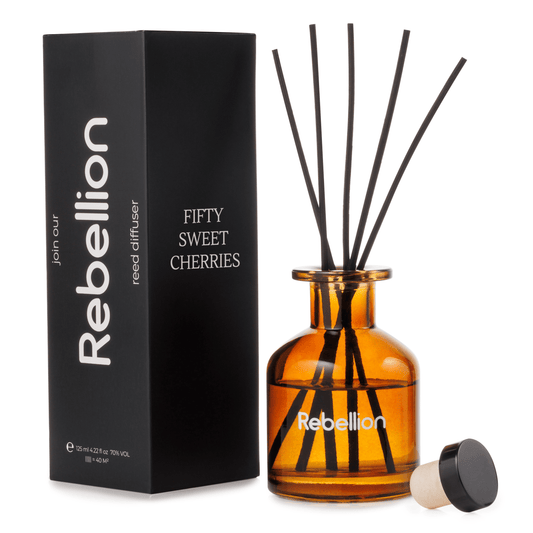
For constant and even scenting, reed diffusers are best — they require no attention and pose no fire risk. Candles, on the other hand, are more about ritual and moment: they are lit consciously, with intention, and they transform an ordinary evening into something special. Each format serves its purpose, and the ideal choice is to have both in your home.
Regardless of the format, the key indicator of quality for a niche home fragrance is its composition. Natural vegetable or soy wax, essential oils instead of synthetic fragrances, minimal chemical stabilizers. This is not just a question of scent quality — it's a question of health, especially if the fragrance burns or evaporates in an enclosed space for several hours a day.
How to choose niche home fragrances: a practical approach
Choosing the right niche home fragrance is a combination of logic and intuition. Start by defining the mood you want to create in each room. Each fragrance group carries its own emotional weight: woody notes — warmth and stability, citrus — energy and freshness, floral — tenderness and romance, resinous — depth and coziness. These associations are not rigid rules, but they provide a starting point for selection.
The second step is to carefully examine the composition. A quality niche home fragrance will always include specific natural components in its description: essential oil, plant absolute, or natural resin. If the only designation is the general word "fragrance" without clarification — you're looking at a mass-market product in pretty packaging, even if it's positioned as premium.
Don't rush your choice. Give the fragrance time to "open up" in the room for at least 20–30 minutes before drawing conclusions. The scent in the bottle and the scent in an open space are fundamentally different experiences. The best way is to test the fragrance in the room where it will be used, under normal conditions: with standard lighting, temperature, and room occupancy.

Niche perfumery — it's a choice of style and depth
Niche perfumery and niche home fragrances are not about status or appearing knowledgeable. They are about a deeper attitude towards one's own space and one's own image. A person who chooses a niche fragrance consciously asks themselves: "What do I want to feel?" — and this very question represents a completely different level of relationship with perfumery. The answer a niche fragrance provides is always personal — and therein lies its main value.
It's best to start getting acquainted with this segment gradually: one candle in the bedroom, one bottle for everyday use. Give the fragrance time to become a part of your space and image before looking for the next one. Niche perfumery rewards patience: the more time you spend with a fragrance, the deeper you understand it — and yourself through it. And that's why finding "your" fragrance in the niche segment is not a purchase, but a small discovery.